Cut
LIGHT PERFORMANCECut describes how proportions and facets interact with light, influencing brightness, fire and scintillation. For standard round brilliants, GIA cut grades range from Excellent to Poor.

NATURAL ORIGIN · TIMELESS BRILLIANCE
Natural diamonds are crystallised carbon formed deep within the earth. Each has its own combination of cut, colour, clarity and carat weight—the internationally recognised 4Cs used to describe diamond quality.
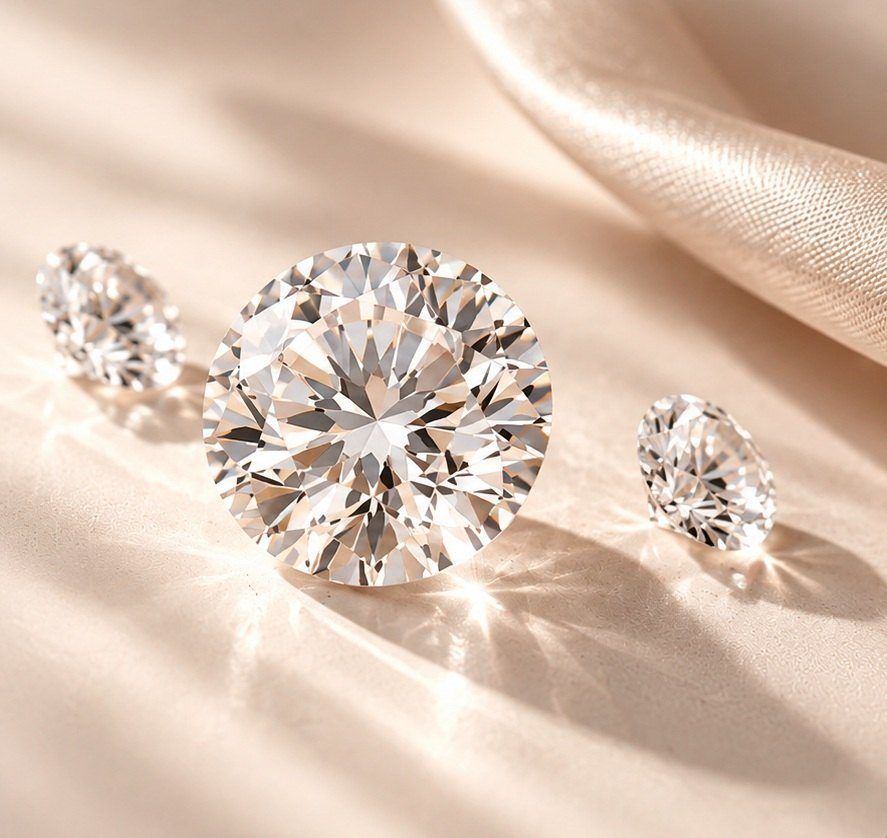
UNDERSTANDING NATURAL DIAMONDS
The 4Cs—Cut, Colour, Clarity and Carat Weight—provide a consistent framework for comparing diamonds. They work together; no single C tells the complete story.
A thoughtful choice balances visual beauty, grading information, proportions, setting and budget.
THE 4Cs
Cut describes how proportions and facets interact with light, influencing brightness, fire and scintillation. For standard round brilliants, GIA cut grades range from Excellent to Poor.
In the normal diamond colour range, D begins at the colourless end and colour becomes progressively more noticeable toward Z.
Clarity evaluates inclusions and blemishes. The GIA scale contains 11 grades, from Flawless through Included, assessed under 10× magnification.
Carat measures diamond weight rather than visible size. One metric carat equals 0.2 grams, and two equal-weight diamonds can appear different because of proportions and shape.
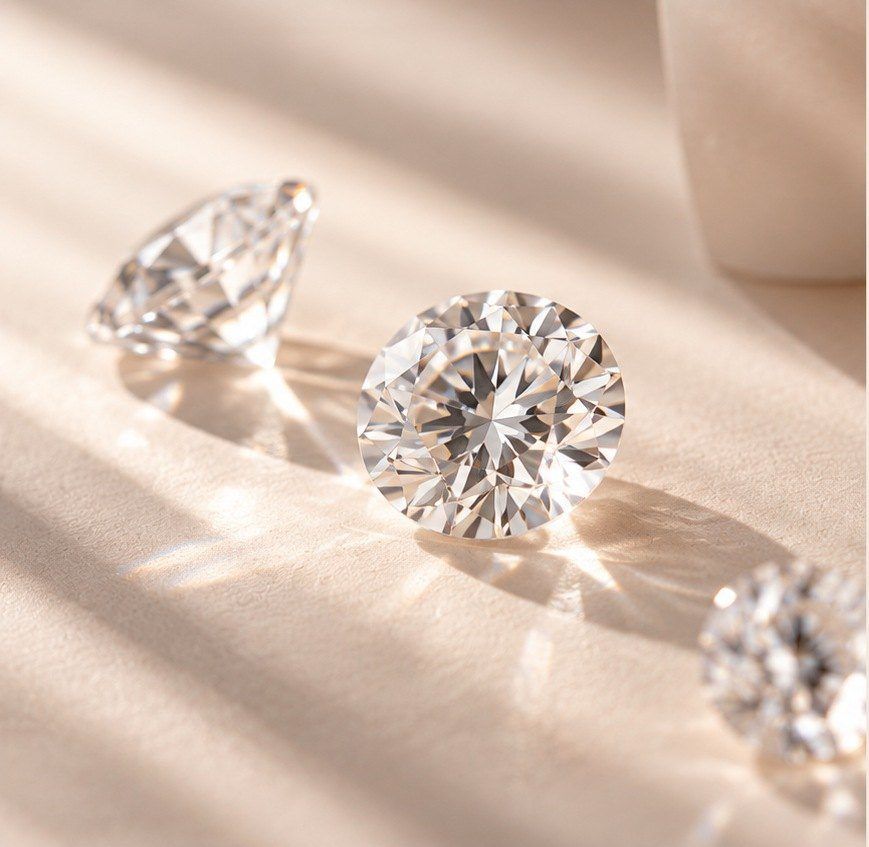
BEYOND THE 4Cs
A recognised independent grading report records the diamond's quality characteristics and helps verify what you are comparing.
Polish concerns the finish of facet surfaces; symmetry concerns the precision and alignment of the diamond's facets and outline.
Some diamonds emit visible light when exposed to ultraviolet radiation. Fluorescence is reported separately from the 4Cs.
Round, oval, pear, emerald and cushion describe shape. Measurements and proportions affect face-up appearance and how the diamond works within a setting.
A CLOSER LOOK
The D-to-Z scale describes the degree of colour in diamonds within the normal colour range. Small grade differences can be subtle to the eye.
Clarity runs through FL, IF, VVS, VS, SI and I categories. Location and nature of inclusions matter alongside the grade itself.
For standard round brilliant diamonds, cut grading considers appearance and craftsmanship factors including brightness, fire, scintillation, proportions, polish and symmetry.
BEFORE YOU CHOOSE
MEGHA BESPOKE ATELIER
In bespoke jewellery, the stone and setting should be considered together. Shape, proportions, metal colour and design all influence how the finished diamond presents when worn.